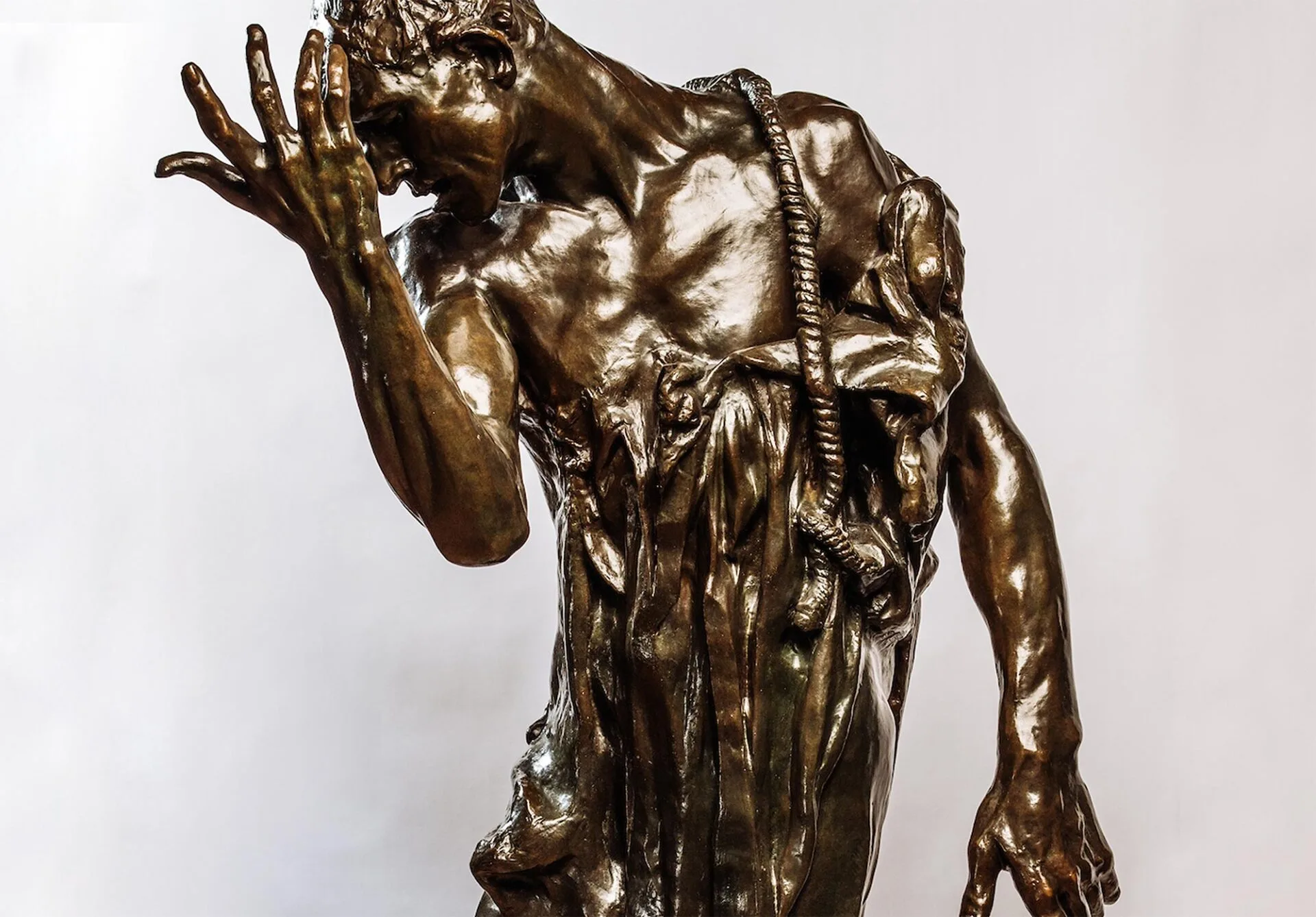
Auguste Rodin, Pierre de Wissant, Vertu, circa 1886-1887.
Rodin: Toward Modernity —
Auguste Rodin
Rodin: Toward Modernity presents 40 of the artist’s most celebrated bronze sculptures, including The Burghers of Calais, The Kiss, Saint John the Baptist, figure studies for The Gates of Hell, and portraits of Honoré de Balzac.
Organized into four thematic sections—Burghers of Calais, The Gates of Hell, Portraiture, and Fragments—the exhibition invites viewers on an artistic journey through Rodin’s career. Each section illuminates pivotal aspects of the French sculptor’s work, showcasing an evolving mastery of form and the revolutionary techniques that define his rich artistic legacy.
Burghers of Calais transformed the landscape of public monuments by emphasizing the emotional depth of human experience in defining historic moments. Commissioned by the French city of Calais in 1884 to commemorate a moment in the Hundred Years’ War, Rodin’s work deviated from traditional monuments that celebrate victory and heroism through grand, idealized figures, capturing instead the heroic nuances of anguish and self-sacrifice.
The Gates of Hell features characters from Rodin’s monumental portal, commissioned in 1880 for the Paris Decorative Arts Museum entrance. Inspired by Dante’s Inferno, this work became a wellspring of creativity for Rodin, giving rise to many of his most iconic figures, such as The Kiss and The Three Shades, both featured in the exhibition. These works were initially part of the portal composition but gained fame independently for their profound evocation of human emotions. Rodin devoted nearly four decades to The Gates of Hell, fueling his artistic vision throughout his career.
Portraiture presents sculptural selections that feature Rodin’s exceptional talent for depicting not only the physical likeness of his subjects but also their character, spirit, and emotional depth. Each piece reveals an intimate study of human nature, inviting contemplation of the subjects’ thoughts, feelings, and experiences.
Fragments highlights Rodin’s ability to portray motion through sculpture. By focusing on the mechanics of movement, Rodin revealed the dynamism inherent in the human form. The creation of deeply pocketed, fragmented body parts in isolation was revolutionary and challenged traditional notions of sculptural wholeness.
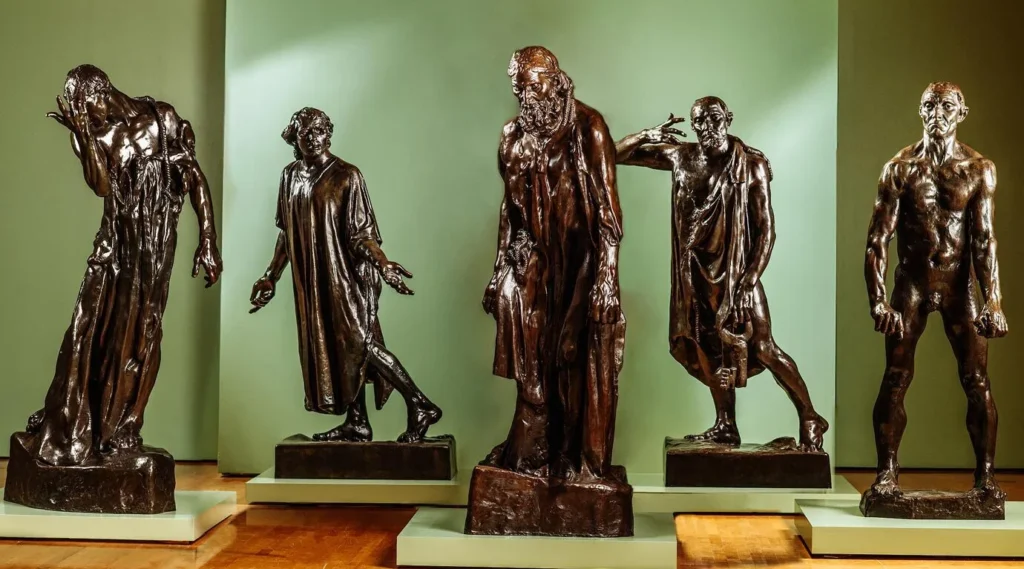
Auguste Rodin, Pierre de Wissant, Vertu, circa 1886-1887. Auguste Rodin, Jean de Fiennes, Vetu, Modeled circa 1885-1886. Auguste Rodin, Eustache de St. Pierre, Vetu, 1886-1887. Auguste Rodin, Jacques de Wissant, Vetu, 1885-1886. Auguste Rodin, Jean d’Aire, Nude, 1885-1886.
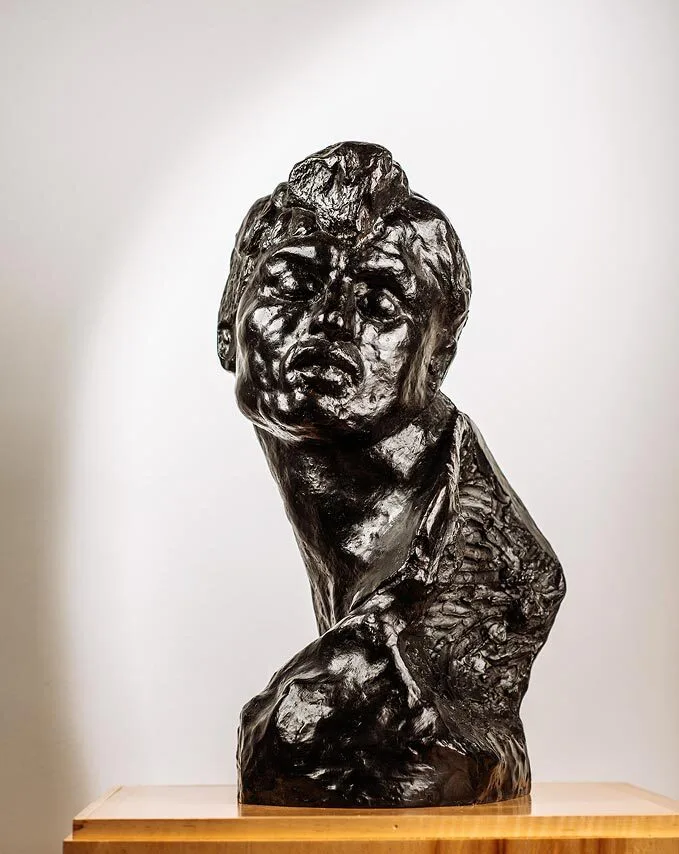
Auguste Rodin, Monumental Head of the Shade, 1880.
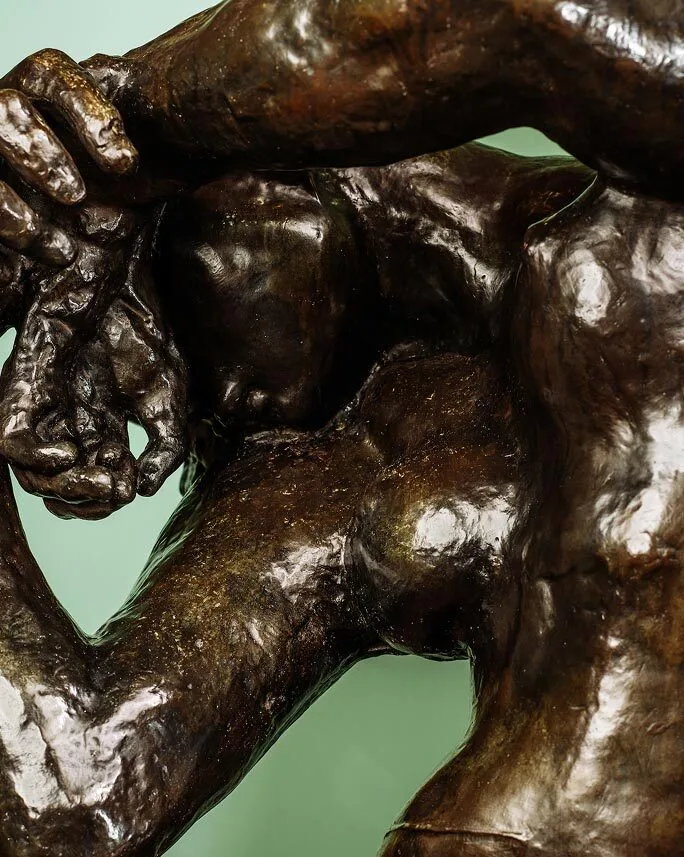
Auguste Rodin, Meditation with Arms, Modeled after 1900.
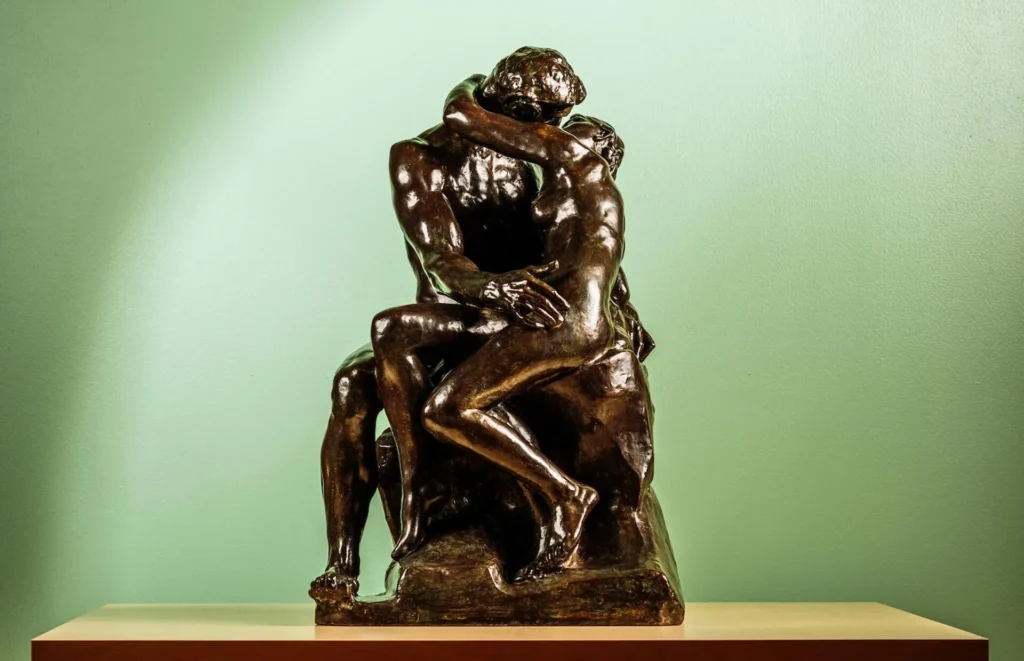
Auguste Rodin, The Kiss, Modeled circa 1881-1882.
Auguste Rodin
