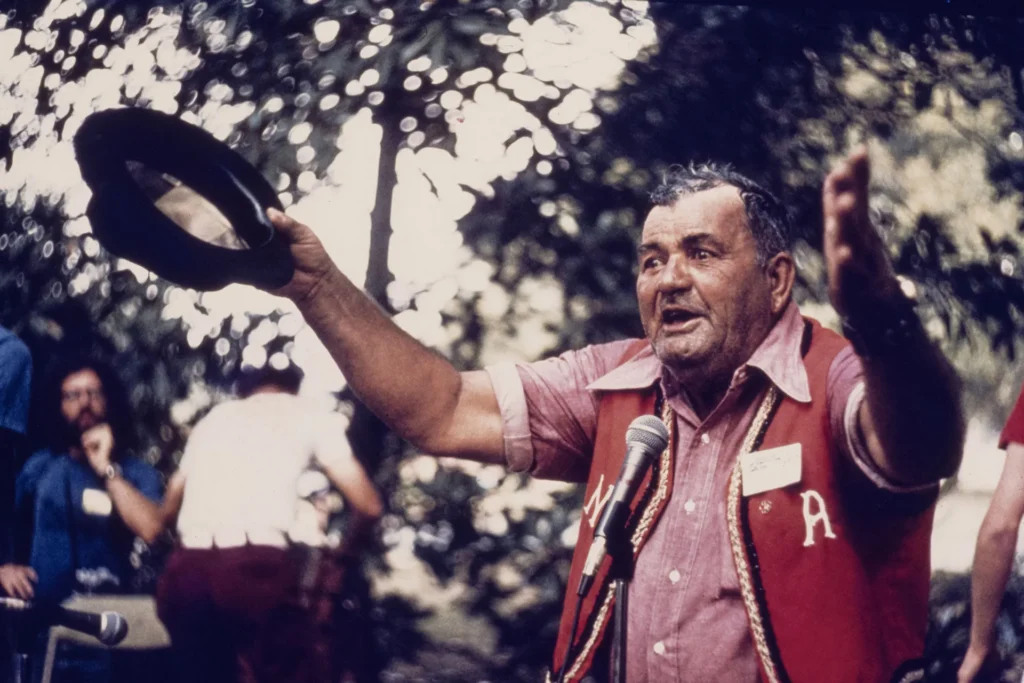
Elemore Morgan Jr., Untitled [Nathan Abshire], 1976. Courtesy of the artist. © Elemore Morgan Jr.
Elemore Morgan Jr. — Photographs from the Festival of American Folklife, 1976
Printed from the original slides and exhibited for the first time, paired with ephemera from the artist’s papers, twenty-three photographs are presented fifty years on, during America’s 250th Anniversary.
In the summer of 1976, the Smithsonian’s Festival of American Folklife ran for twelve weeks on the National Mall as the centerpiece of the nation’s Bicentennial, the country’s 200th birthday. A collective of Cajun and Creole musicians from South Louisiana took to the stages as recognized bearers of a national heritage.
Louisiana artist Elemore Morgan Jr. (1931-2008) traveled to the Festival in Washington, D.C. with his camera, drawn by a question larger than the event itself: what is America, and who are the people who make it? Known for his landscape paintings, Morgan engaged the world constantly through his lens, and at the Festival he turned it on the performers from home and the crowds who gathered to hear them. Among them were ballad singers Inez Catalon, Lula Landry and Alma Barthélémy, the Balfa Brothers with Ally Young, the Ardoin Family with Canray Fontenot, Nathan Abshire, Vinesse Lejeune, Lionel Leleux, Don Montoucet, and Elton Quibodeaux, playing alongside Native American, Haitian, Québécois, and French musicians. Morgan moved beyond the stages into the demonstration areas, markets, and monuments, where artisans and craftspeople worked at their trades. In all of it, he found his own region held within a wider American story, distinct and shared at once.
Morgan gathered these images for his AMERICA SERIES, an ambitious body of painting he imagined but never fully realized, and the Festival gave him its vocabulary. “I must return [to painting],” he wrote in his diary on July 6, 1976, “and above all, attempt to realize some of these American ‘ideas’ as paintings. By sharing my slides frequently and getting to know these images, I believe I am stocking up my memory or imagination with my own special vocabulary of forms, which, I hope and trust, will come out as uncontained composites, poetic images based on the experience of [being] in this part of the planet.” Morgan wasn’t only documenting other artists at work. Through the camera, he was taking in the country and its people, building the vocabulary his paintings would draw upon.
That purpose gives these images their charge. Morgan’s eye for gesture, light, and texture frames performers, audiences, and the exchange between them with sensitivity, drawing the viewer closer to the ties between people, place, and tradition. By turning his lens on the crowds as often as the performers, he caught the country celebrating its own culture. They are at once witness and interpretation, document and authored image: a nation reflecting on itself.
Here, the line between record and artistic vision blurs. The exhibition asks how photographs like these shape a shared understanding of a historical moment while leaving room for evolving and individual truths. Elemore Morgan Jr. — Photographs from the Festival of American Folklife presents 23 photographs printed from Morgan’s original slides and exhibited for the first time, alongside ephemera from the artist’s archives, shown fifty years on, during America’s 250th. Together they return to the questions that originally drew Morgan to the Mall: what makes a people, and what holds their differences together?
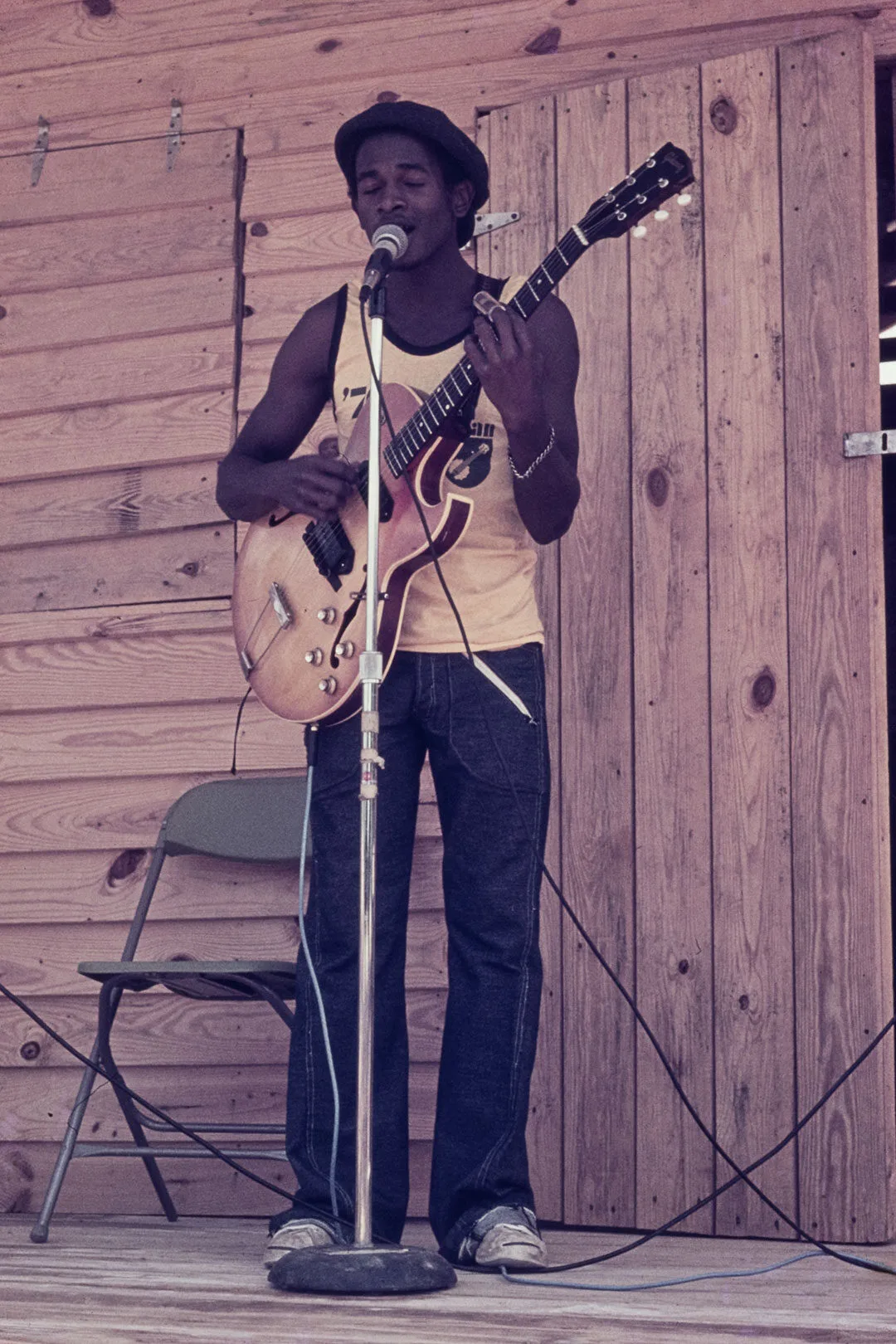
Elemore Morgan Jr., Untitled [Lonnie Pitchford], 1976. Courtesy of the artist. © Elemore Morgan Jr.
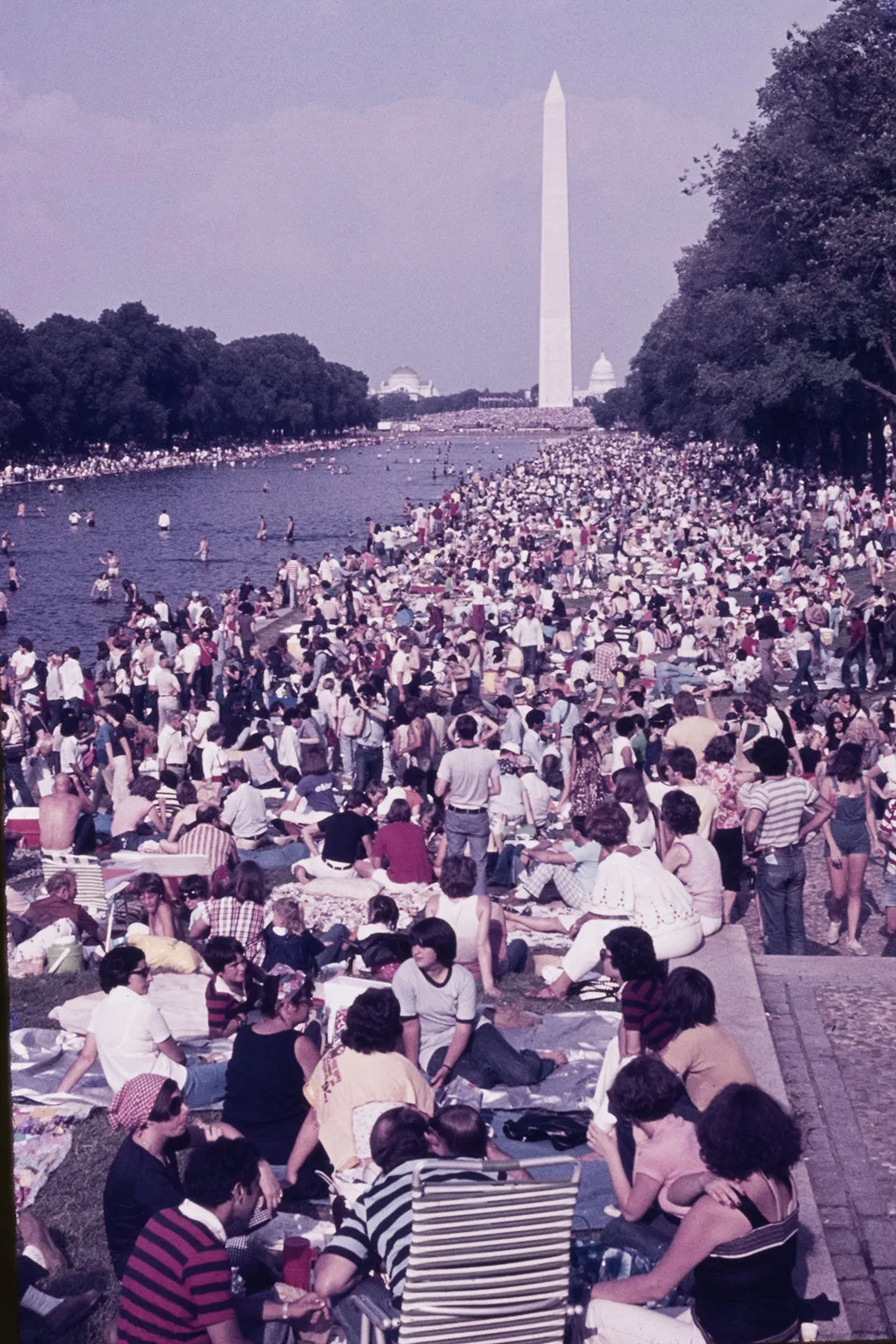
Elemore Morgan Jr., Untitled [Washington Monument & Reflecting Pool], 1976. Courtesy of the artist. © Elemore Morgan Jr.
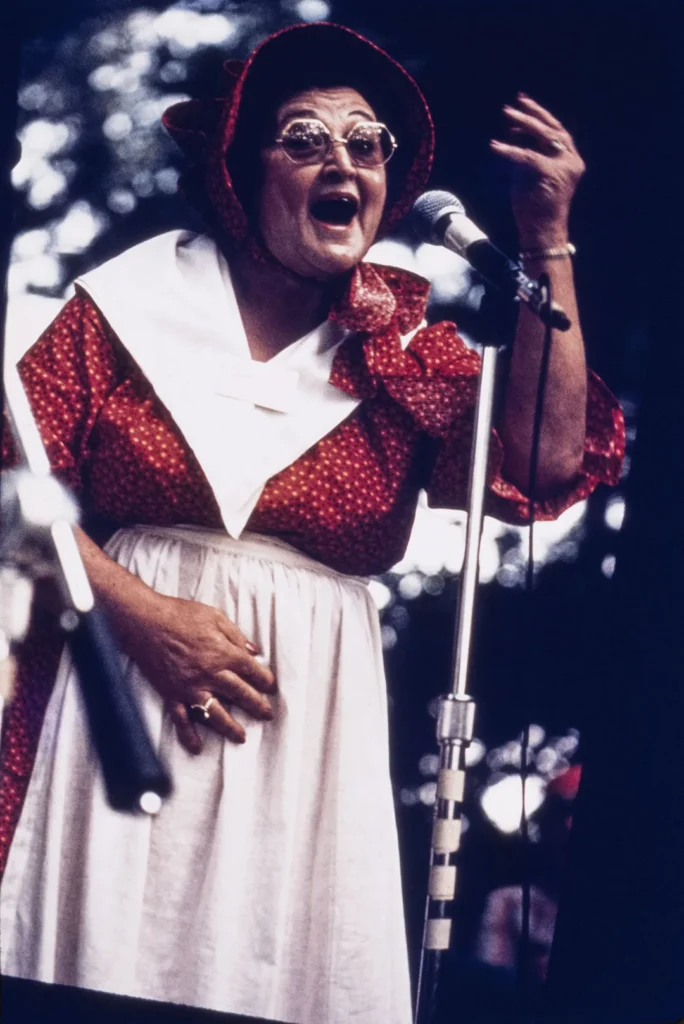
Elemore Morgan Jr., Untitled [Lula Landry], 1976. Courtesy of the artist. © Elemore Morgan Jr.
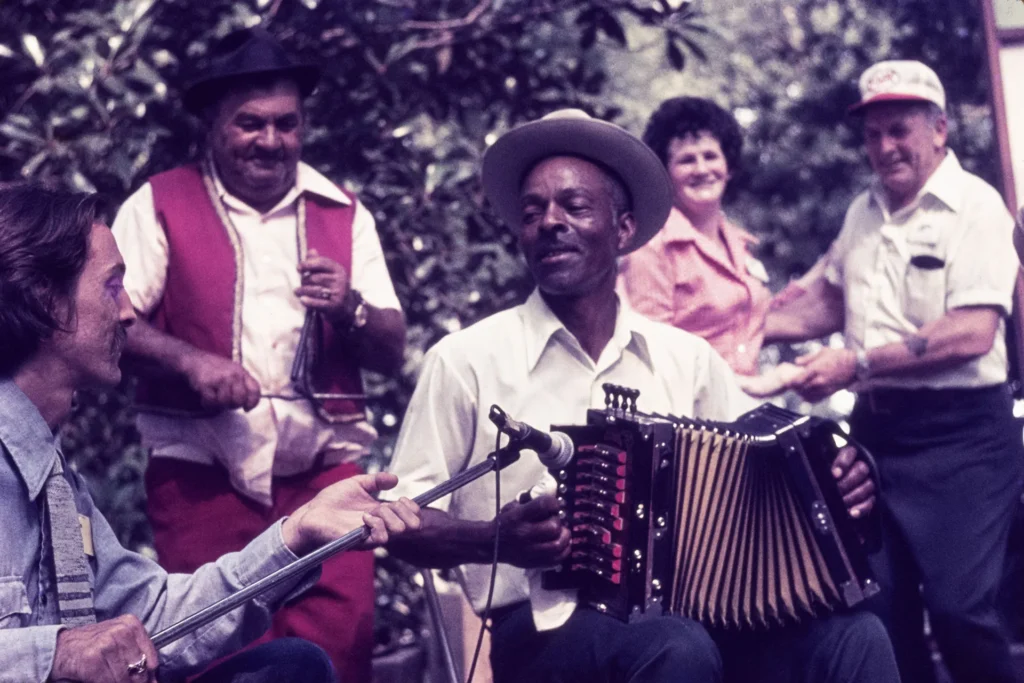
Elemore Morgan Jr., Untitled [Barry Ancelet, Nathan Abshire, Bois Sec Ardoin, & Sue and Earl Vasseur], 1976. Courtesy of the artist. © Elemore Morgan Jr.
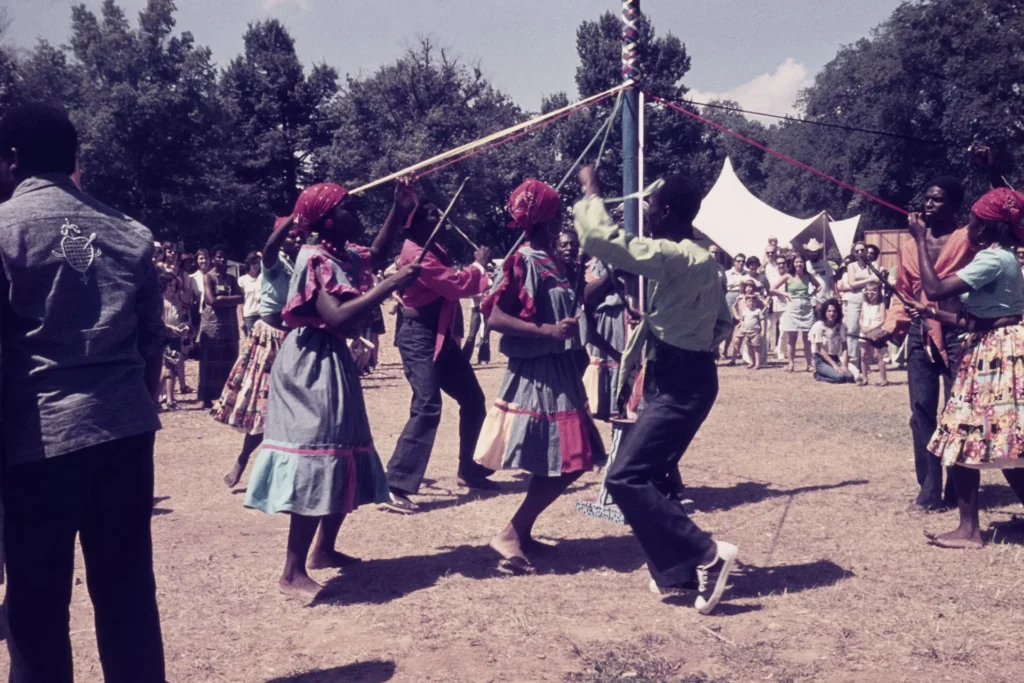
Elemore Morgan Jr., Untitled [Haitian maypole dancers), 1976. Courtesy of the artist. © Elemore Morgan Jr.
