Summer programming is presented by Dr. Jay Culotta and Kiki Frayard.
Resonant Roots & The Art of Listening
When hearing moves to listening
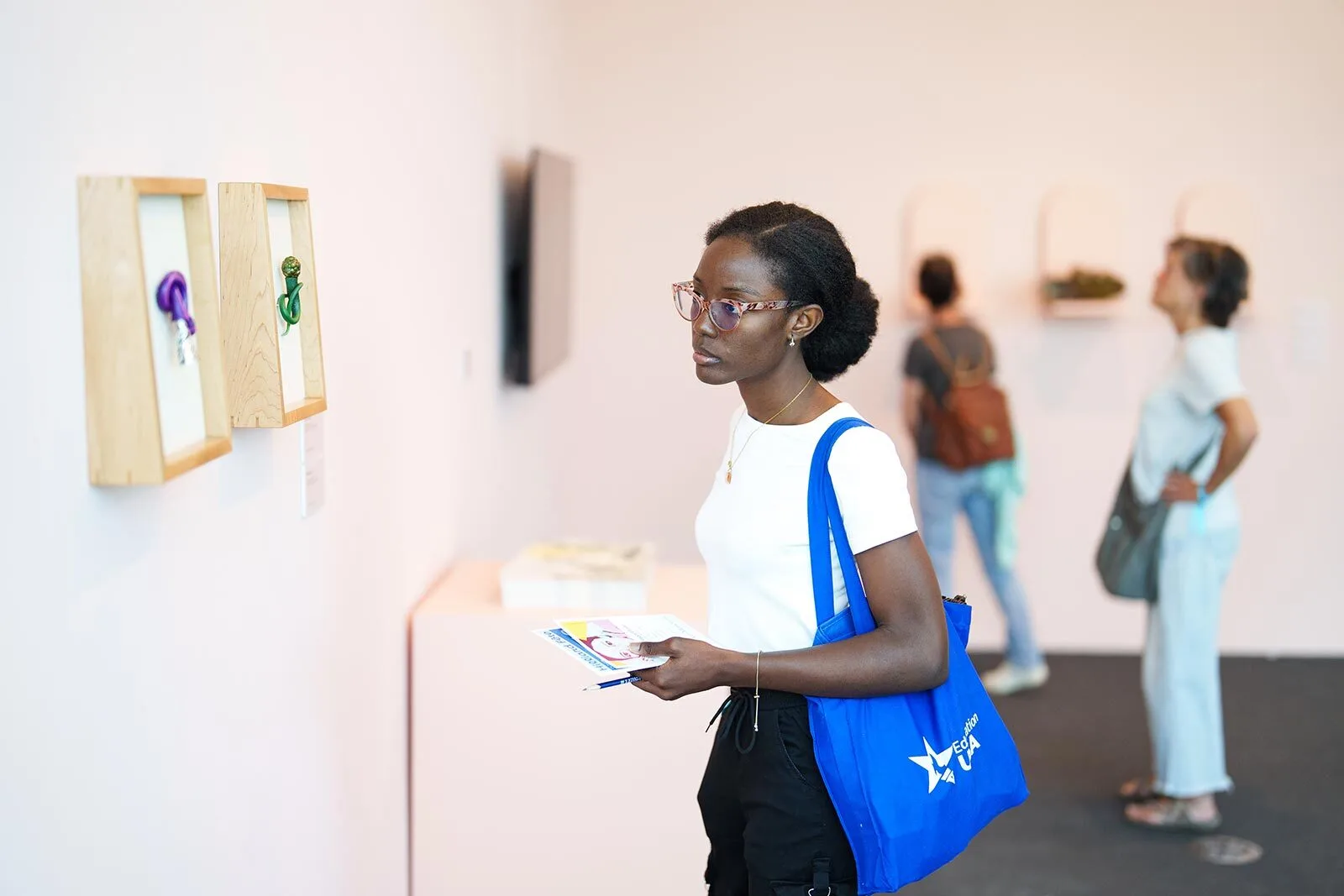
When it comes to sound art, how we listen is how we see. Through the regional exhibition, Gulf Streams: Atchafalaya Remixed, art moves from the field to the gallery, bringing the sights and sounds of the swamp forward, but there’s a catch — they are also flipped, remixed, and re-envisioned. The eleven featured artists are steeped in practices involving fieldwork – they find inspiration outside the studio, and their research becomes active and alive. They engage with the landscape and the community to gather their reference material. They become the voice of the ecological world.
What happens when sound documentation, traditionally used to capture environments, becomes an art expression? Gulf Streams: Atchafalaya Remixed draws the viewer into the basin’s sonic environment and ecological world through this process. The exhibition brings together artists around a single recording of the swamp. These artists recontextualize the document to bring a new truth, proving how we listen connects us to the living world around us.
An Invitation
The result is an invitation to listen, but how does one move from hearing to truly listening? In this article for Hilliard Stories, we offer insights on the lineage of sound art and tips for engaged listening in a noisy modern world.
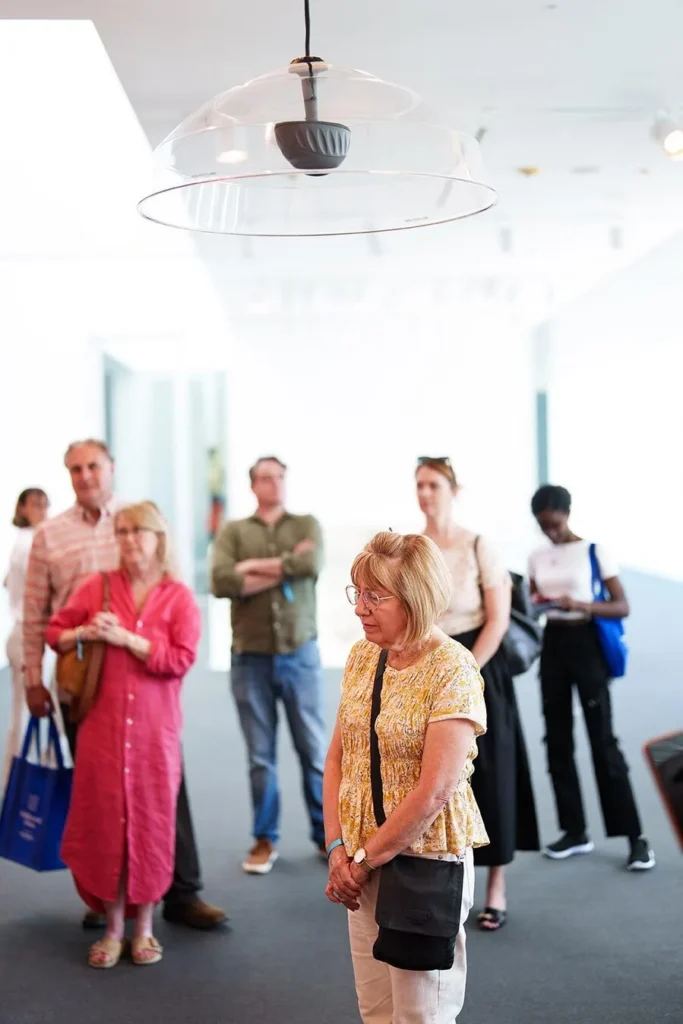
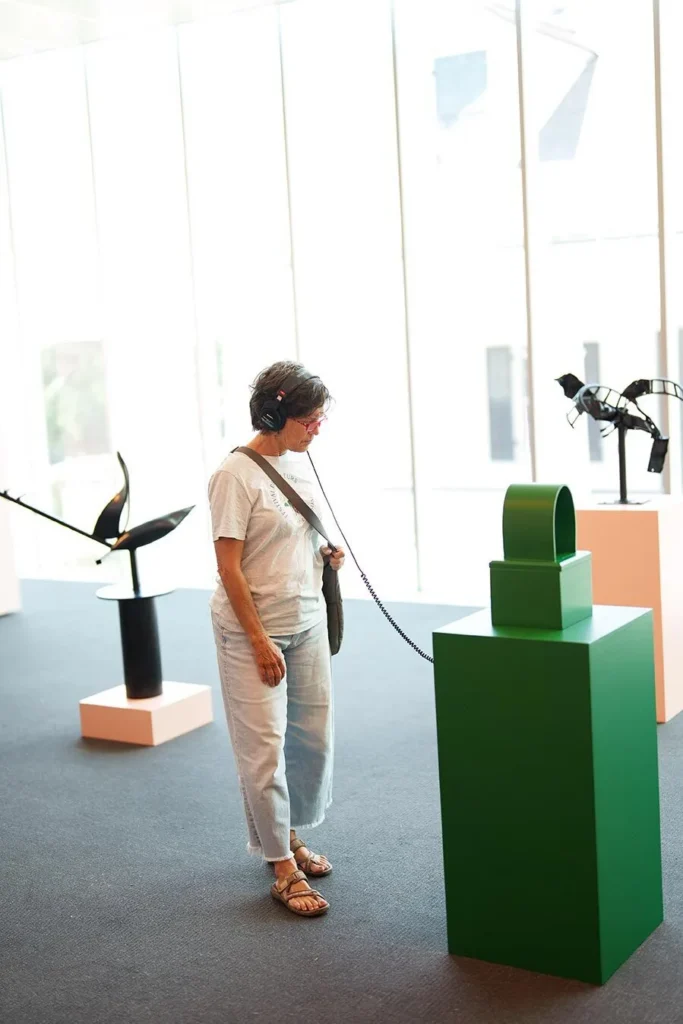
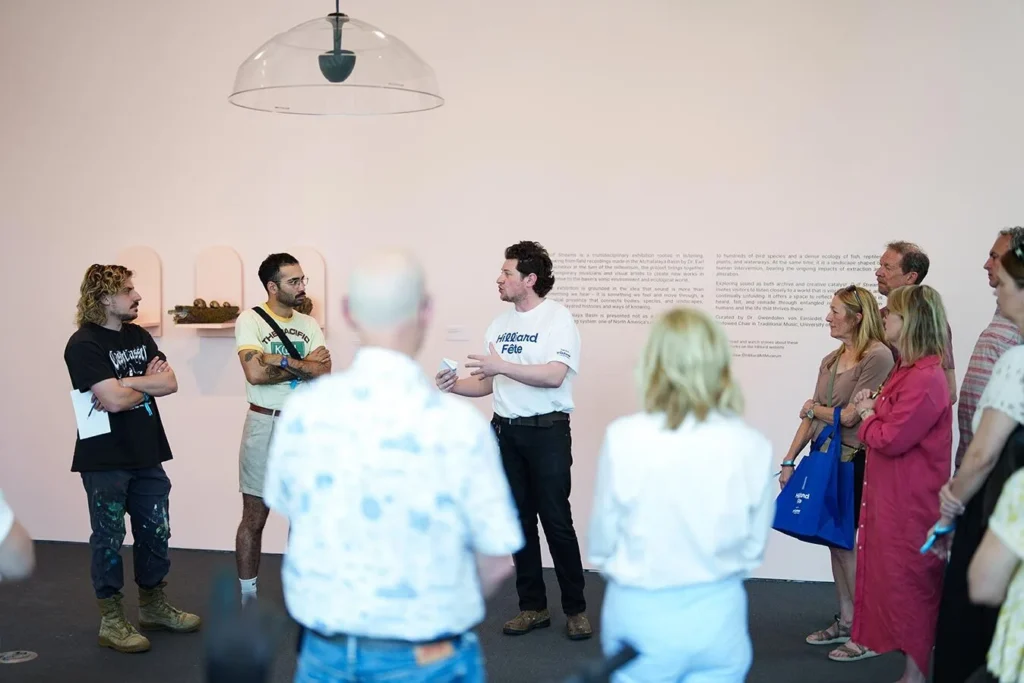
Visitors to the Hilliard Art Museum’s Exchange Space stand under a sound cone to hear an original field recording made in the Atchafalaya Basin by Dr. Earl Robicheaux at the turn of the millennium. Nearby, a sound station with headphones is offered to experience four new pieces of music that were created in response by The Babineaux Sisters, Trey Boudreaux, Danny Devilier, and Keith Frank, respectively — all exist adjacent to physical and media artworks by Claire Amy, Edgar Cano, Dan DiCaprio, Tanner Menard, Olivia Luz Perillo, and Martin Peyton hung in the galleries. The exhibition is guest curated by Dr. Gwendolyn von Einsiedel, The Dr. Tommy Comeaux Endowed Chair of Traditional Music at the University of Louisiana at Lafayette.
In this digital extension, we start with the same intention — to listen. We invite you to take a moment now and listen to an excerpt from the field recording made by Dr. Earl Robicheaux.
Note: headphones recommended
The Sonic Impulse
How has sound filtered the region containing the nation’s largest river swamp and moved artists to action? The basin of Southwest Louisiana has long been a catalyst for artists of all disciplines. Unique everyday sounds, and a rich musical heritage have defined the region – think of the joie de vivre that fills a crawfish boil as a musical jam organically ignites, the vibrant festival season turning a downtown street or a park into a mixture of sounds, smells, and vibrations, or the peaceful pleasures of an evening stroll on the lake observing birds from the nearly 400 species that call the swamp home.
As we zoom in on the exhibition’s primary sound source, Dr. Earl Robicheaux’s field recording, we remember that documenting this rich, sacred, and fragile wetland is not new but part of a deep lineage. Notably, the 1934 sound documentations of Alan Lomax, the early 1970s films of Les Blank, leading up to the more recent work of Drake LeBlanc (2024), which preserves trail riders and the broader Creole culture, as well as the international group FLEE’s music-and-visual remix project, Pasé Bél Tan (2025), based on works sourced from the Center for Louisiana Studies Archive.
A Wider Context
Sound Art presentations in museums are diverse and many, ranging from conceptual to practical. The first formal use of the hybrid term at a major museum was as the title of a 1979 exhibition, Sound Art at the Museum of Modern Art in New York (MoMA), featuring recordings of female artists Maggi Payne, Connie Beckley, and Julia Heyward.
But artists have perpetually played with sound as a means of deconstructing, communicating, and provoking since the early 20th Century. According to the Tate Museum guide on the subject, “Sound Art dates back to the early inventions of futurist Luigi Russolo, who, between 1913 and 1930, built noise machines that replicated the clatter of the industrial age and the boom of warfare. Dada and surrealist artists also experimented with art that uses sound.Marcel Duchamp’s composition Erratum Musical featured three voices singing notes pulled from a hat, a seemingly arbitrary act that had an impact on the compositions of John Cage, who in 1952 composed 4’33’’ a musical score of four minutes and thirty-three seconds of silence.”
In 1977, Max Nauhaus’ Times Square produced an invisible, continuous drone of synthesized sound radiating from a set of pedestrian grates in New York, considered the first sound sculpture. Associated with the Fluxus movement of the 1960s to 1970s, Yoko Ono produced instructional scores and minimalist auditory “Events,” blurring the line between everyday life and performance art. Watch A Brief History of Sound Art from the Berman Museum of Art.
Throughout the 1980s and 1990s, Sound Art was established by groundbreaking events in Berlin, London, and New York. In the present digital age, the artistic practices of sound artists are fueled by greater access enabled by technical innovations, resulting in immersive installations and presentations in various forms.
Gulf Streams: Atchafalaya Remixed continues the discussion of sound as art by morphing a traditional tool – sound recording – and allowing it to evolve as it is used by regional artists in social contexts, for ancestral research, and for the production of artistic materiality.
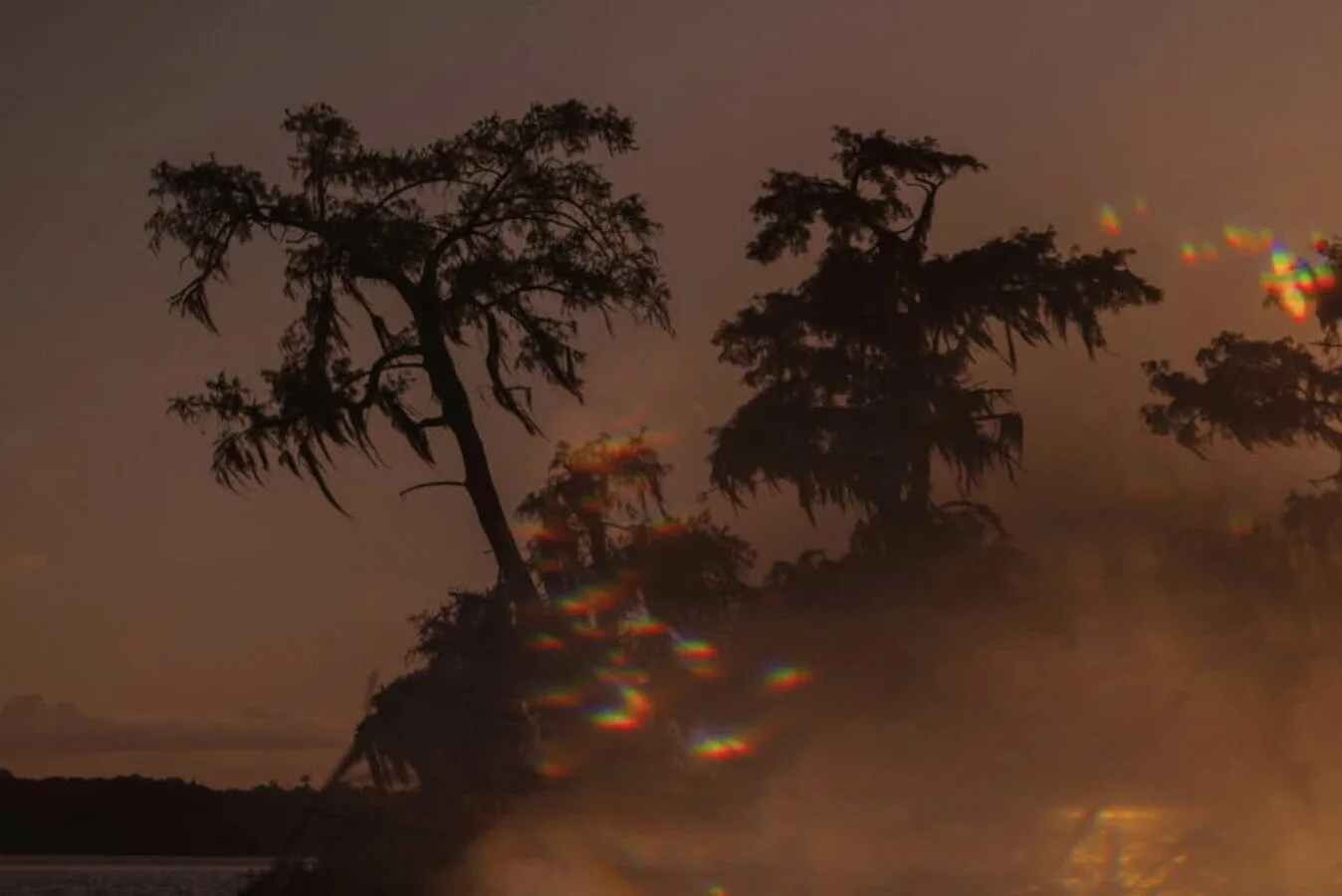
Olivia Luz Perillo, 333 / Returning, 2026
Cultivated Listening
“Listening involves quieting the mind as much as possible while opening eyes and ears to scan my surroundings. While shooting in the natural world, I use a long-focal-length lens to zoom in on vignettes and wildlife. I think my collage work and surreal imagery come from listening, simultaneously internally and visually, to create compositions that naturally fit and mirror back where I am at the moment.”
— Olivia Luz Perillo, Multidisciplinary Visual Artist
At the start of this article, a link to hear the excerpt from the Atchafalaya Basin field recording by Dr. Earl Robicheaux was provided. Now, let’s explore 3 tips to move beyond simply hearing and into listening.
- Move from passive to active by finding a stillness. You may consider closing your eyes and observing your own breathing.
- Allow sound to occupy space. Use your imagination to engage the 5 senses. Do you see anything while listening? What do you taste or smell? What might you touch in this environment? Is your hearing amplified?
- Open the channels of reflection. Observe your response to the sounds and artwork presented here. Have you encountered this sound before? Does it summon a memory?
Rewind: Listen Again
Go ahead and press play again and try it out.
Note: headphones recommended
Reflection:
Reflection:
- What did you hear this time?
- What changed?
- What may have awakened?
Is your curiosity piqued to know more about how this soundscape has evolved and been remixed? Explore the links below.
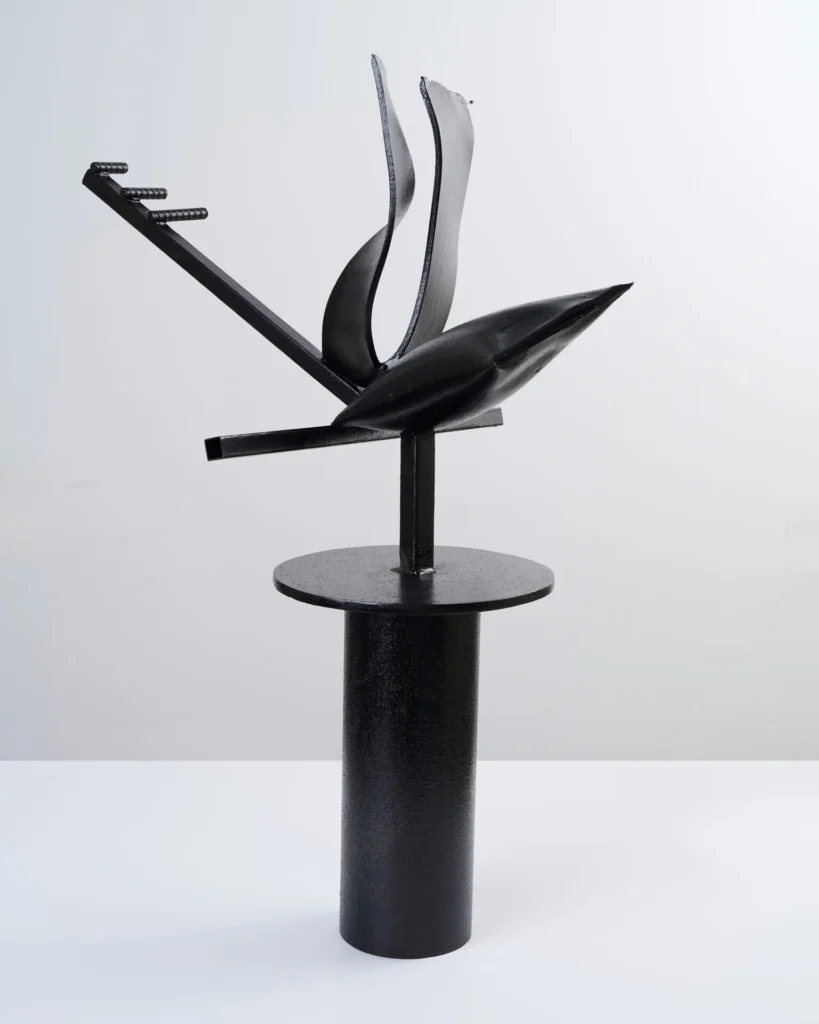
Martin Payton, Ammons, 2004
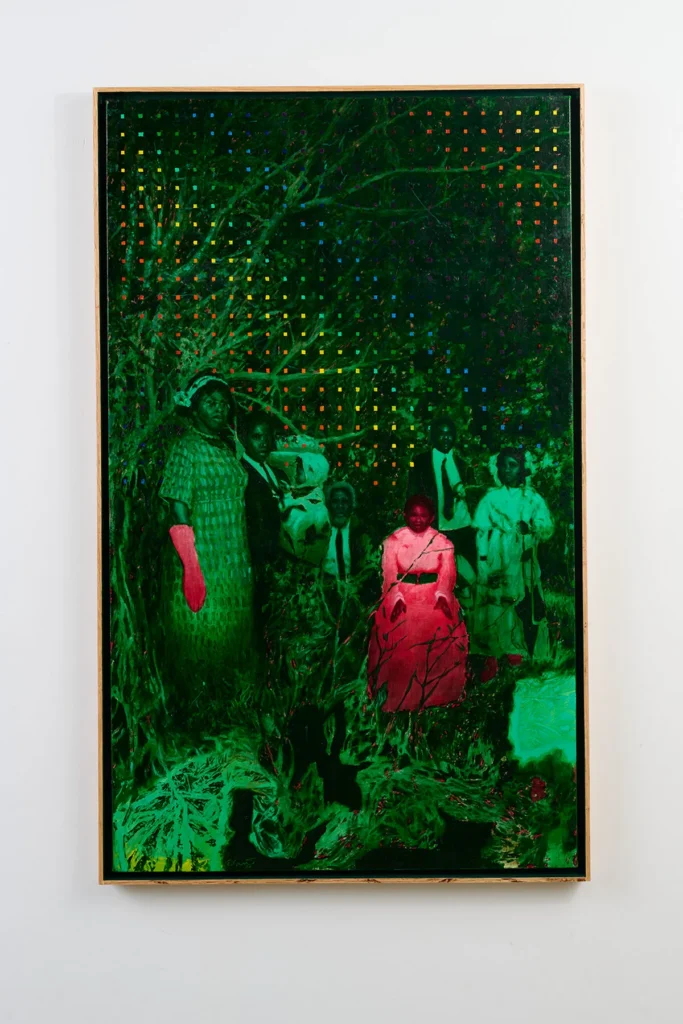
Edgar Cano, Flowers to dawn, 2026
More Gulf Streams Grooves
Join us in the gallery for the Gulf Streams: Atchafalaya Remixed experience: hear the complete field recording by Dr. Earl Robicheaux and the music it inspired, while viewing the visual artworks through August 15, 2026.
Artist Talk Recap – Gulf Streams Live: Rooted in Listening
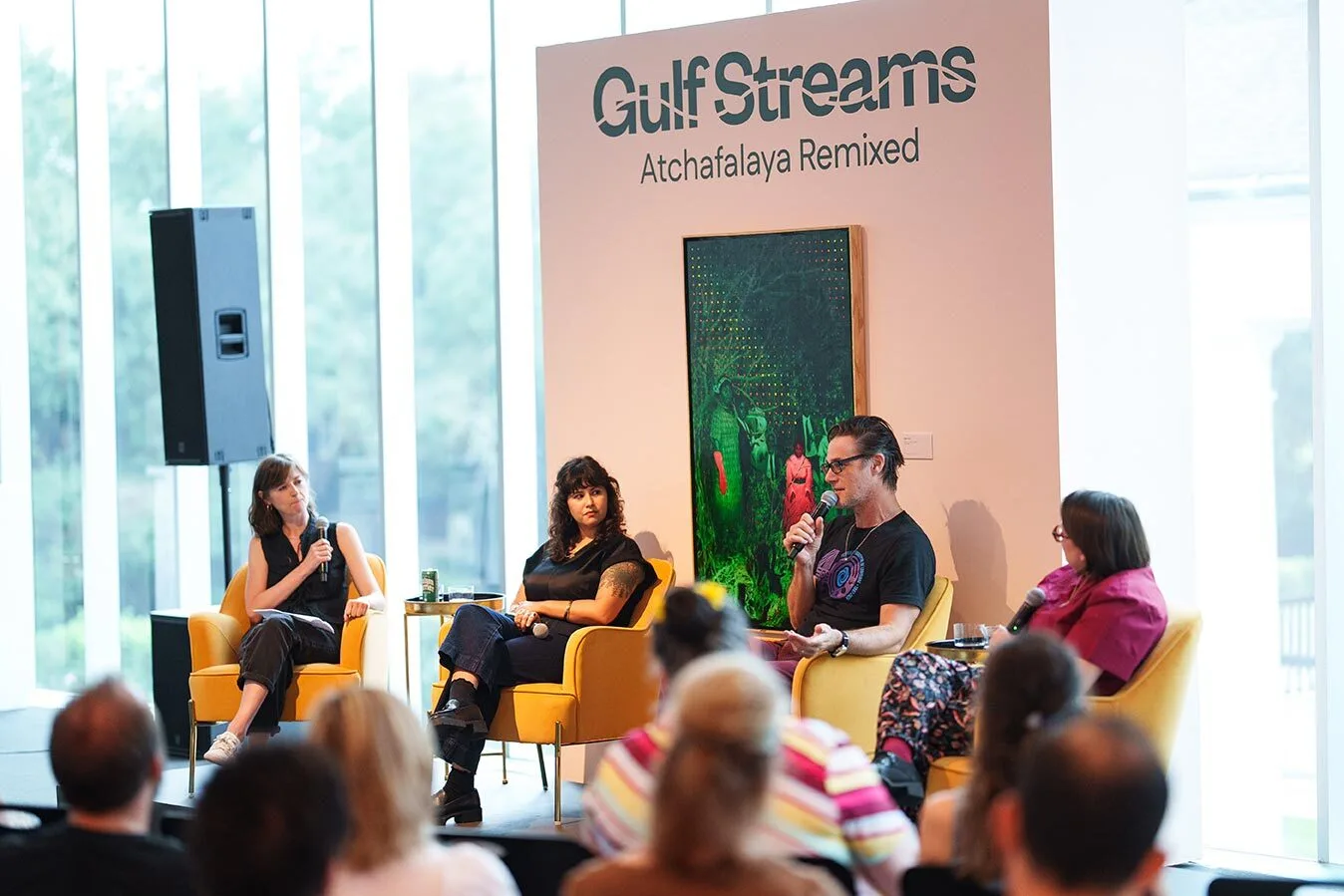
On May 21, 2026, the Hilliard Art Museum hosted artists Danny Devillier and Olivia Luz Perillo, with folklorist Maria Zeringue, for an artist talk moderated by guest curator, Dr. Gwendolyn von Einsiedel. This program brought the community together for a lively conversation and a celebration with music by Palmetto, a Trey Boudreaux experimental project.
Listen to the full audio of the panel
Note: headphones recommended
Gulf Streams Podcast Series
Learn more about the process of exhibiting artists through a dedicated podcast series airing on KRVS.
Learn at the Hilliard
Join our summer series featuring Gulf Streams: Atchafalaya Remixed.
Acknowledgments
Summer programming is presented by Dr. Jay Culotta and Kiki Frayard.
The Hilliard Art Museum extends a special thank-you to guest curator Dr. Gwendolyn von Einsiedel, The Dr. Tommy Comeaux Endowed Chair of Traditional Music at the University of Louisiana at Lafayette, for weaving together the featured musicians and visual artists in this exhibition. Gulf Streams: Atchafalaya Remixed continues the evolution of sound art surrounding the basin by highlighting the multidisciplinary nature of the region’s contemporary artists allowing their fieldwork to connect us deeper in place.
Gulf Streams: Atchafalaya Remixed is on view at the Hilliard Art Museum at the University of Louisiana at Lafayette through August 15, 2026.
