UL Dance and the Hilliard Art Museum in Forward Motion
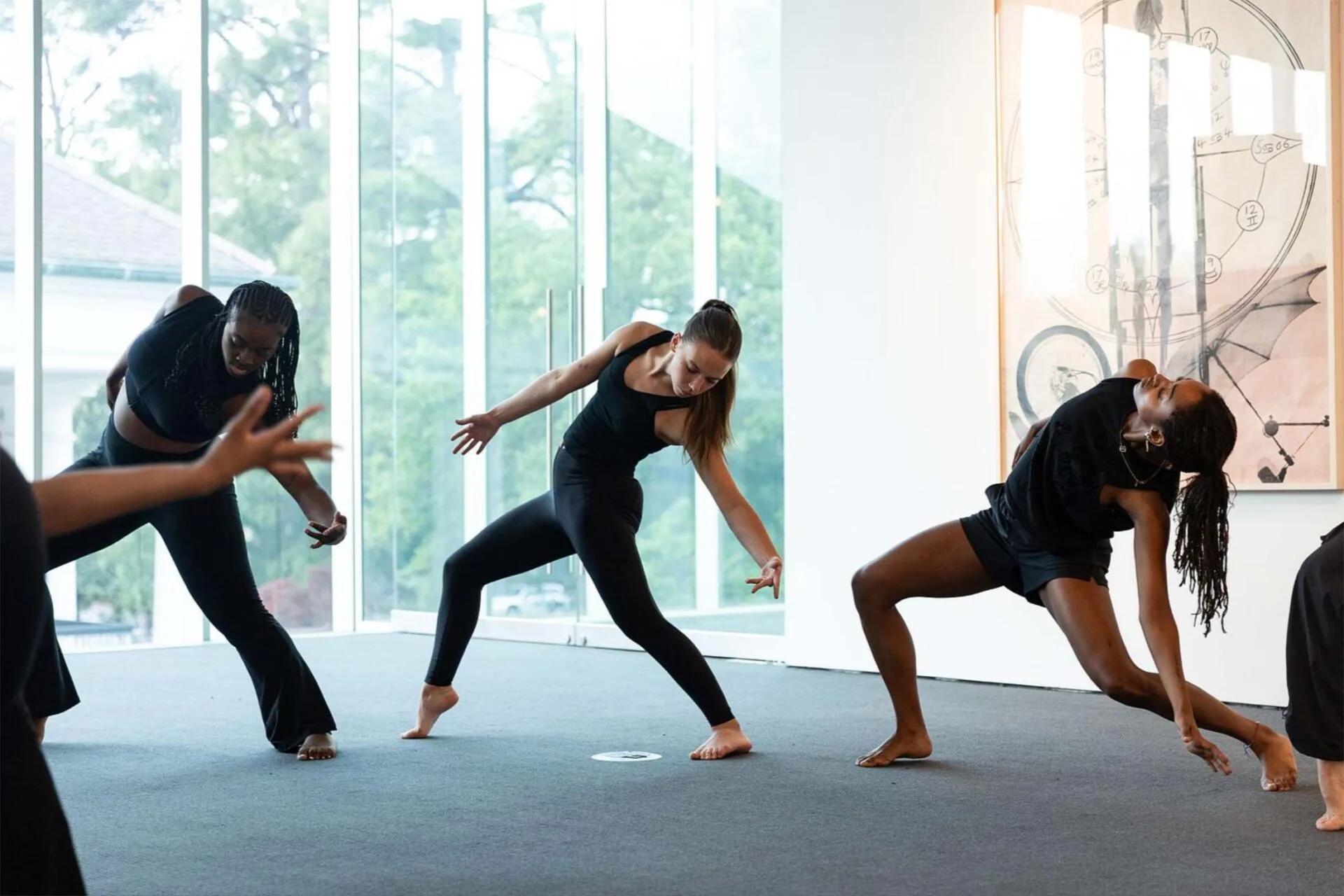
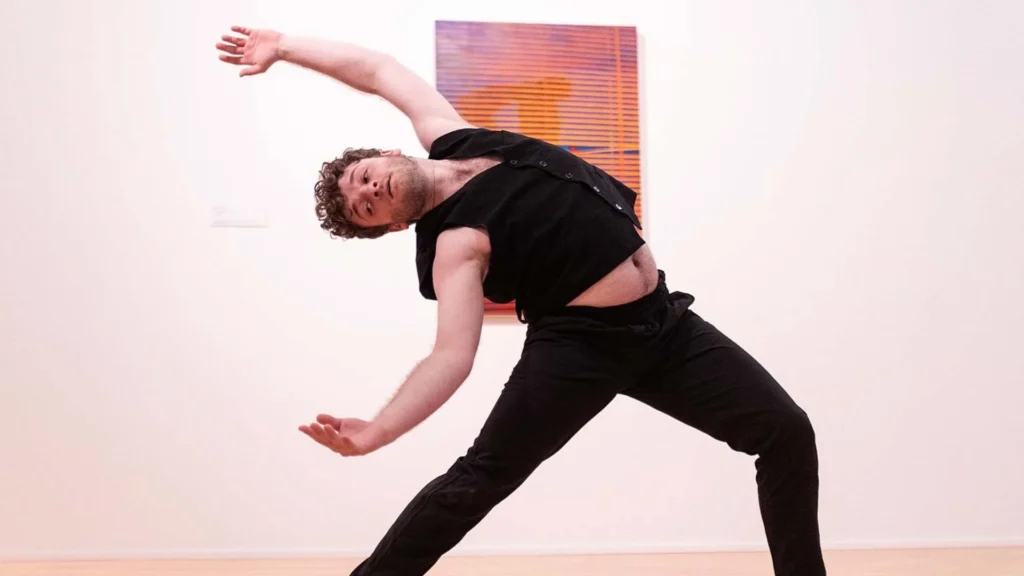
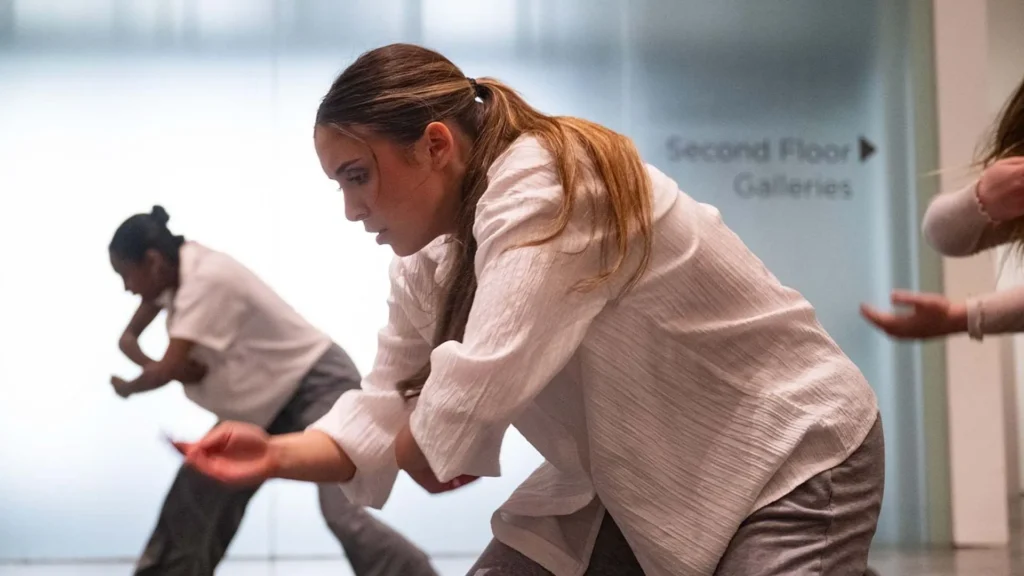
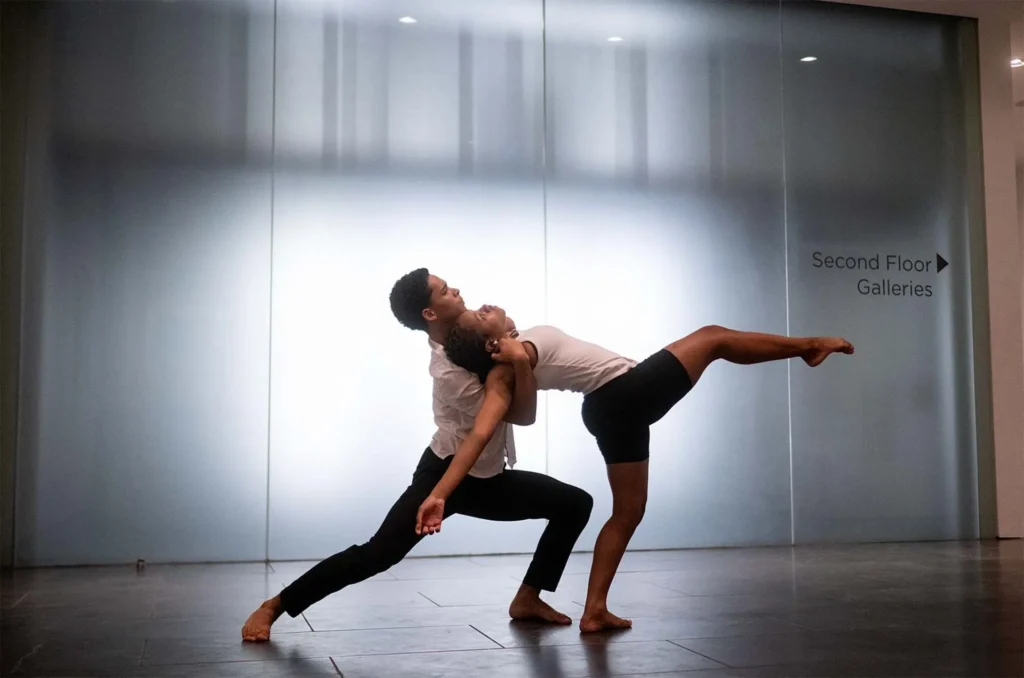
One of the most energizing campus partnerships between the Hilliard Art Museum and the University of Louisiana at Lafayette is the collaboration with the UL Dance department, which culminates twice a year with Fall and Spring Dance. These events are living laboratories, where students, faculty, and the community converge to explore how movement and visual art intersect and communicate with one another. The vision of this collaboration is expansive. It weaves together scholarship, cross-disciplinary collaboration, and public engagement while providing a site-specific performance experience that challenges traditional boundaries between performer and spectator.
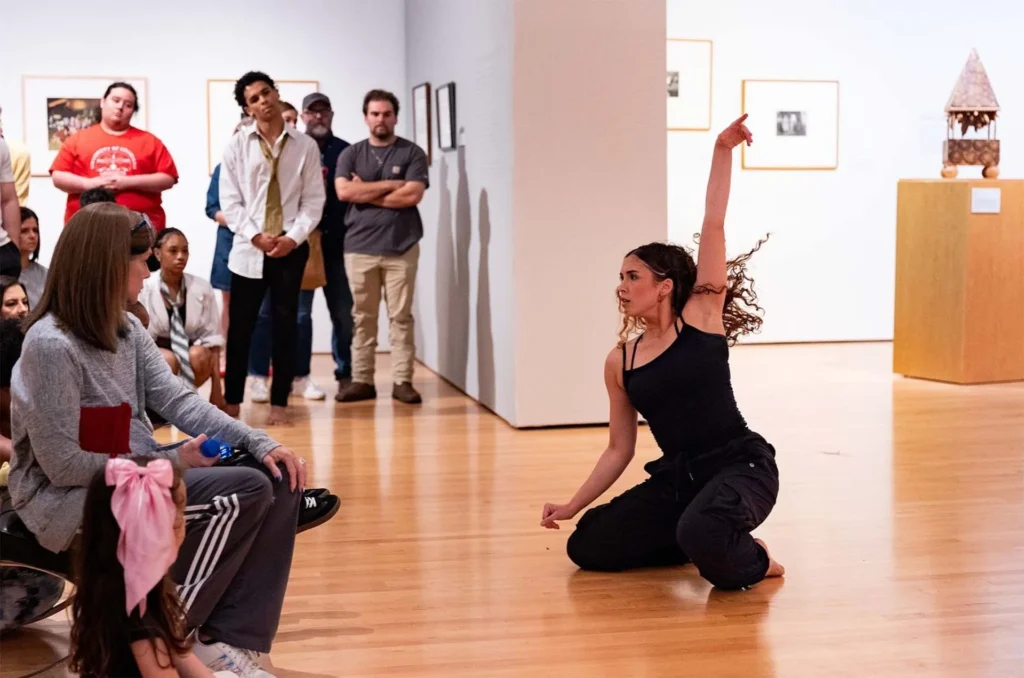
Assistant Professor of Dance Alex McBride explains that the experience for the performers is “both exhilarating and vulnerable. There’s no stage lighting, no separation between performer and viewer, which can be intimidating but also deeply rewarding.” He goes on to say, “and it’s equally transformative for audiences— they become part of the performance. It deepens our sense of community and demonstrates how different disciplines can influence one another. It also gives the public a glimpse into how alive and connected campus life really is. These collaborations make “community” more than a buzzword—it becomes action.”
Improvisation, Composition, and Capstone Projects: Learning in Motion
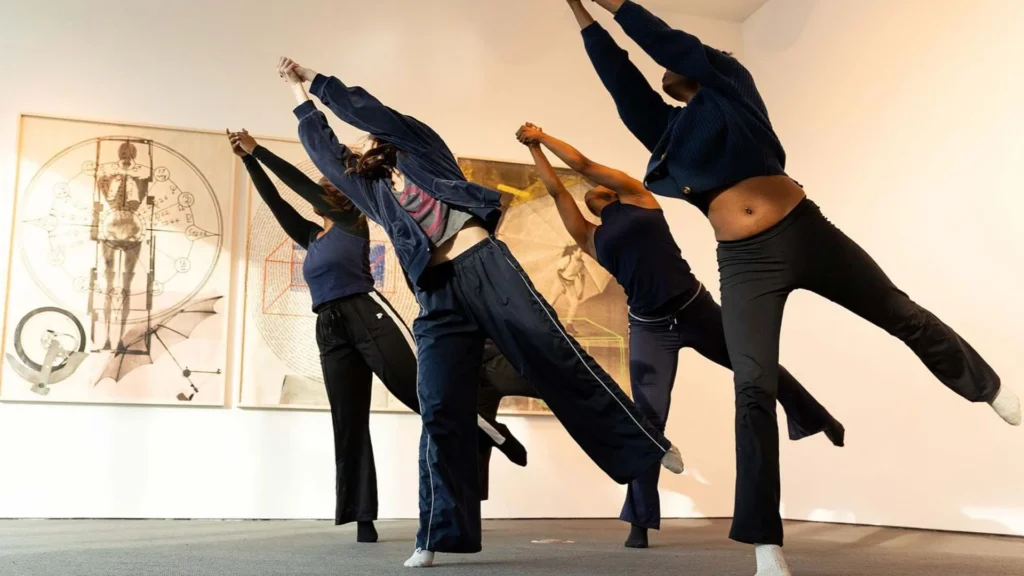
Since 2019, the Dance Department has partnered with the Hilliard Art Museum to host courses, performances, and research experiences that activate the galleries in new ways, including the Improvisation class in the fall, the Composition class in the spring, and serving as a research and performance resource for student capstone projects. Both the Composition and Improvisation classes culminate in site-specific performances—Fall Dance and Spring Dance—each serving as a form of experiential, applied learning.
McBride explains, “Place shapes movement—particularly here in the Deep South, where environment, culture, and gesture are all intertwined. Working at the Hilliard allows this to be explored in real-time. For example, my improvisation class recently discussed how color theory and light within the exhibition Nervescape XI by Icelandic contemporary artist, Hrafnhildur Arnardóttir / Shoplifter, influenced their movement—something that would never have come up in a mirrored studio.”
In this case, dancers shifted their choices depending on the colors and textures of the parts of Nervescape XI that they were placed near. For example, a dancer’s movements near the column of the work, which has many layers of different reds and is also very deeply textured, became quicker, sharper, and more robust. Dancers near the areas of lighter colors, the whites and pastels, moved with a floating gentleness. With Nervescape XI, the dancers were also able to touch and interact directly with the art, which offered a whole wealth of new ways of moving through and with the space and work.
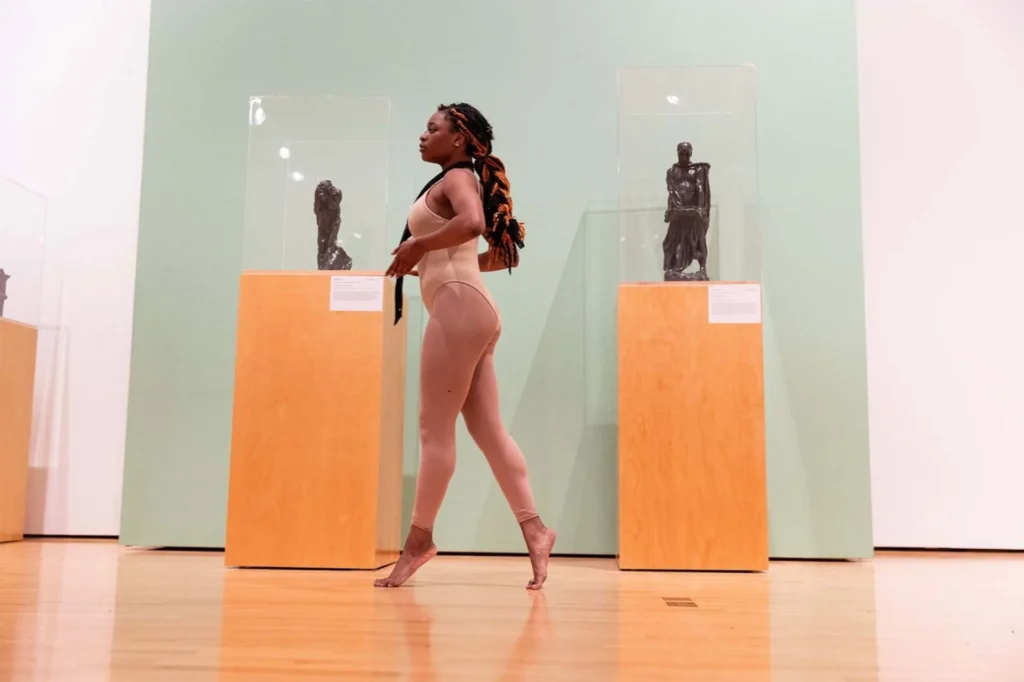
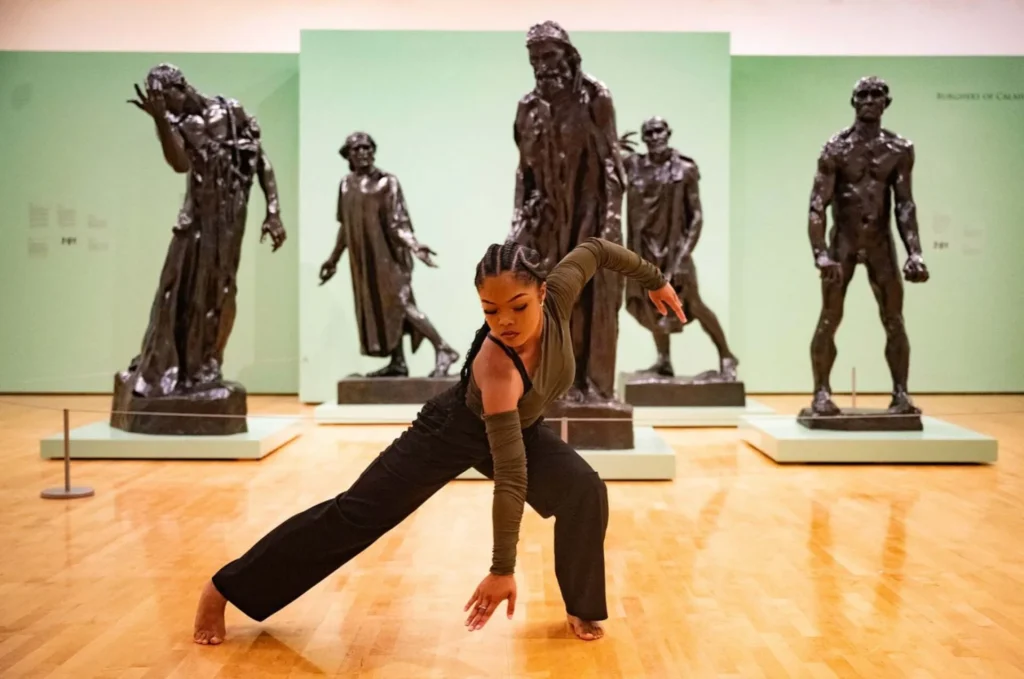
During the exhibit Rodin: Toward Modernity, one capstone student even changed their project once they saw the exhibition. Initially, they conducted research around a particular portrait, but after seeing The Burghers of Calais, they were inspired to create a solo piece accompanied by fellow UL students singing Henri Salvador’s “Petite Fleur,” intentionally performed next to, not in front of the sculpture. The composition reframed Rodin’s monumental work through a queer and gendered lens. The choreographer used the physical and emotional weight, masculinity, and presence of the sculpture as a direct counterpoint and tension to the movement and sound of the composition. The artwork and space impact the dancers in every way; what they choose to explore, as much as the vocabulary or form of the compositions.
A Campus-Wide Invitation to Move
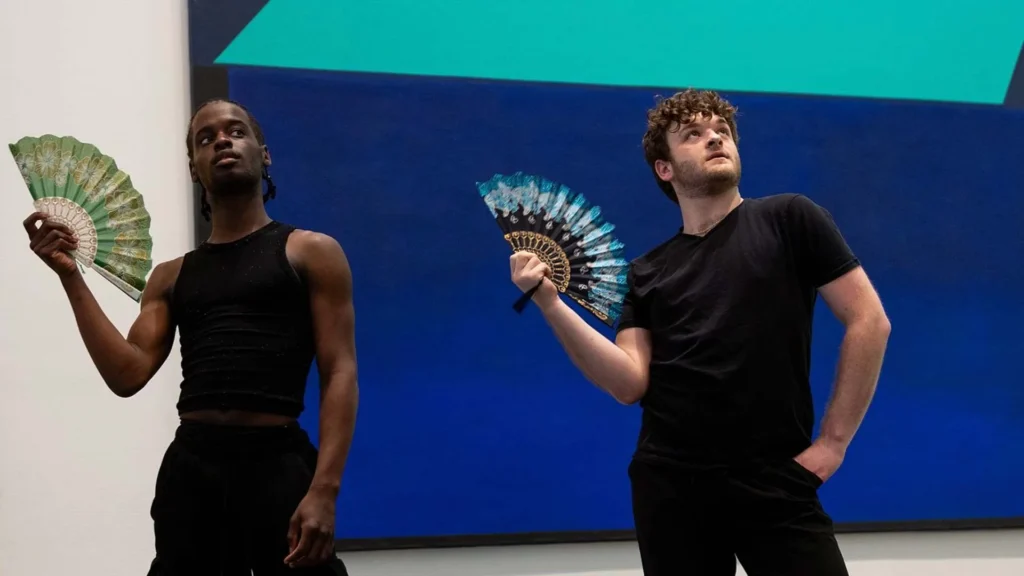
Although Fall and Spring Dance are anchored in the Dance Department curriculum, the events are intentionally open to the wider university community. Participation is not limited to dance students but encourages campus-wide engagement. It is open to all students, movement groups, and faculty proposals. Past performances have included spoken word poetry, vocal performance in collaboration with dancers, and a Fraternity Stroll from the A. Hays Town building to the Hilliard building by the Dance Fraternity. This year’s Fall Dance includes a clowning piece proposed by faculty in response to exhibitions on view Nervescape XI, both a student capstone performance and faculty performance inspired by Fragile Matter, and works by campus organizations such as the UL Royales and the Black Artistic Soul Ensemble (B.A.S.E.).
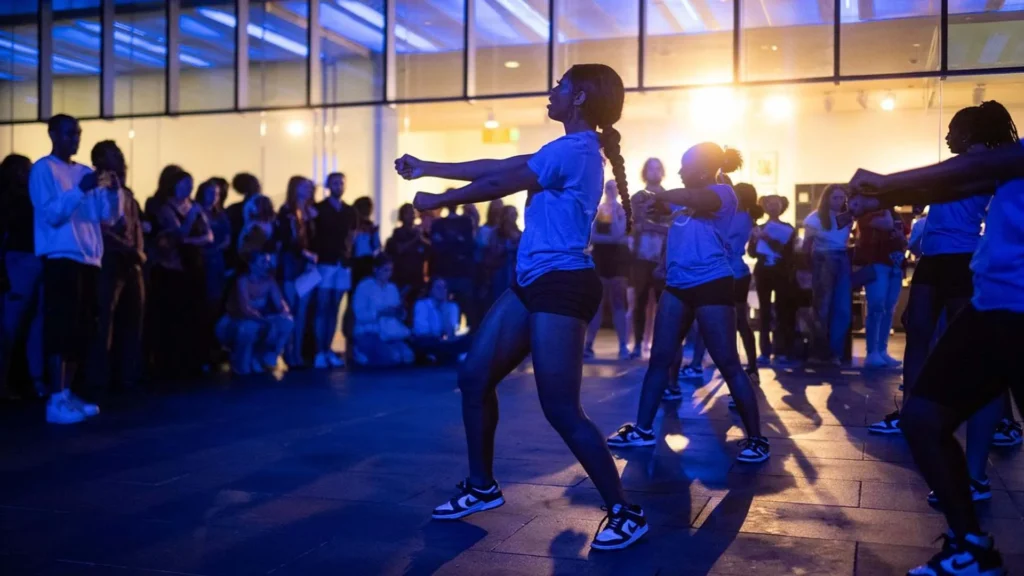
Infinity Dance Group, a student organization specializing in hip-hop dance, performs as part of Fall Dance 2024.
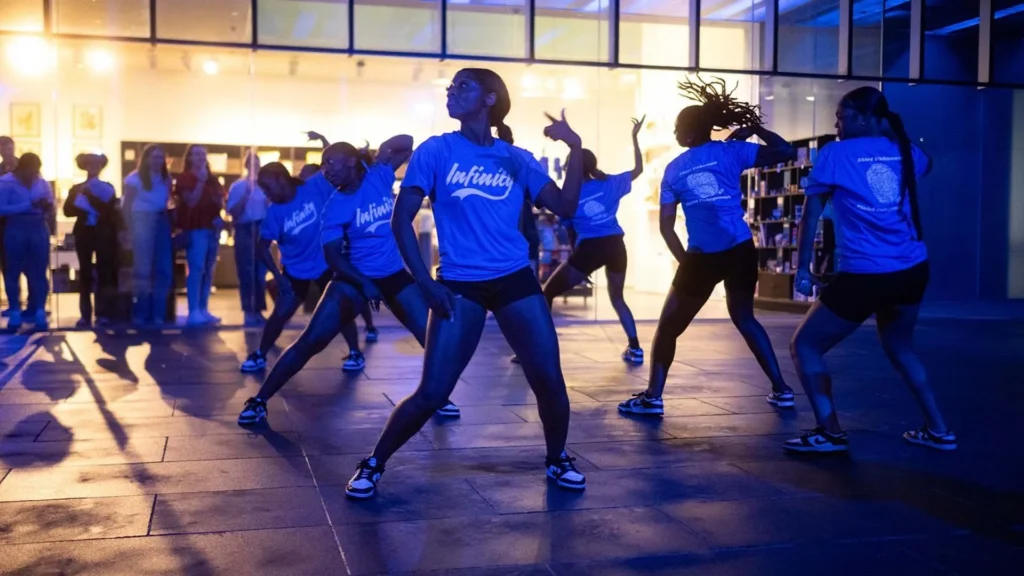
Any movers on campus are welcome to submit a proposal,” says Assistant Professor and Dance Program Coordinator Michael Crotty. “The word ‘inclusive’ is thrown around quite a bit, if I may, but this truly is inclusive of anyone who wants to join—and it materializes through invigorating ways as a result. It becomes a campus-wide event, and not just a ‘dance program’ event.”
Scholarship in Motion
As an R1 institution (a designation awarded to universities with the highest level of research activity, according to the Carnegie Classification of Institutions of Higher Education), the focus on scholarship crosses every aspect of the University. Within the Dance Department, students have the opportunity to participate in an MFA-style program that includes developing capstone projects centered on original inquiry for a thesis. In addition to the creative dance performance component, these projects involve peer-reviewed research, choreography, and movement research. Students have the opportunity to choose the Hilliard as a focal point for their capstone project and as a venue for their performance. “Our dancers referred to the act of making dances as creative scholarly research, so it’s not simply creative. It’s not only scholarly, but we look at how those intersect each other,” explains Crotty. He goes on to say, “The body is an additional research tool in a way of understanding.”
This integrated approach has electrifying implications for cross-disciplinary learning at the University, but it is also part of a broader national conversation exploring what higher education can look like when learning is embodied and interdisciplinary. As recently as this October, Mr. Crotty presented a paper titled Louisiana Dance, Rodin and Hip-Hop on dance programming in Louisiana at the peer-reviewed National Dance Education Organization’s (NDEO) National Conference in Detroit, Michigan. In his presentation, he highlighted the Fall Dance at Hilliard as a prime example of this holistic approach. The fall of 2024 saw a semester-long collaboration between the Hilliard, Assistant Professor of Dance Alex McBride, and Graduate Coordinator for the Master of Architecture and Associate Professor of the School of Architecture and Design, Ashlie Boelkins. Together, Boelkins’s graduate architecture students and McBride’s first-year dancers investigated how people move through built environments.
”Our students met weekly at the Hilliard. My freshman dancers and her graduate architects paired up—one moving, one observing and notating. The architects studied how movement changed across different spaces in the museum, from the bright atrium to narrow hallways…The architects could see in real time how design influences motion, and the dancers became more conscious of how space communicates. It was incredible to see theory and embodiment intersect like that,” explained McBride.
In Spring 2025, the Dance department collaborated with Executive Director, Molly Rowe and Museum Educator, Barbara Helveston, to create an opportunity for Dance Majors to meet artist, Kevin Brisco. Students were able to ask direct questions about his work and build connections, while developing their own work around themes of “surveillance.” The students discussed their reaction to the work, responding to their perception that they are viewing someone in their home voyeuristically. This brought up larger questions for choreographers, such as “Why do we feel safe at home?” and “What do we do at home to recharge?” These opportunities enrich the outcomes of the compositions, while also deepening the scholarly inquiry that informs the integrity of each dance’s development. Collaborations like this exemplify how the Hilliard serves as a living, dynamic space for shared discovery.
Expanding Horizons: Continued Collaboration
The collaboration between the Hilliard Art Museum and the UL Dance Department is not limited to just the gallery spaces. McBride and Crotty see great potential in growing the program with Molly Rowe and Barbara Helveston. Crotty explains, “We’re given a certain amount of autonomy to traverse space and have works throughout the entire museum… even the yard just outside the A. Hays Town building. The flexibility creates a lot of possibilities for creativity, which I very much appreciate about the Hilliard. Molly and Barbara have been incredibly supportive.“ According to McBride, UL dance would like to move towards deepening these relationships and more sustained engagement, including increased opportunity for students to meet artists, studying collections, and the possibility of formalizing cross-listed courses between multiple departments that can take place at Hilliard.
A Living Conversation
As the Hilliard’s galleries fill once again with the energy of Fall Dance, what emerges is more than performance—it’s a living conversation between disciplines, a choreography of ideas and bodies that redefines what learning can look like. Through this collaboration, the Hilliard becomes a laboratory for embodied research, where movement translates theory into feeling and space becomes a text to be read through gesture. This sense of aliveness extends far beyond the museum’s walls. Each collaboration extends outward—across campus, through the community, and into the broader dialogue about how universities can unite scholarship, creativity, and public engagement. In the Hilliard x UL Dance partnership, art and movement meet not as separate disciplines but as shared ways of knowing rooted in curiosity, discipline, and the desire to communicate.
This conversation continues—with every dancer’s step, every audience breath, and every partnership that keeps the university and museum moving, together, toward something more connected and alive.
Contributor Acknowledgments
Special thanks to Michael Crotty, Assistant Professor and Dance Program Coordinator, and Alex McBride, Assistant Professor of Dance, at the University of Louisiana at Lafayette. Their leadership, vision, and commitment to cross-disciplinary collaboration have been vital in shaping the partnership between the Hilliard Art Museum and UL Lafayette’s Dance Program. Their insight and generosity of spirit continue to expand the possibilities of how art, scholarship, and community can move together in the cultural landscape of Lafayette and beyond.
All photographys by Paul Kieu
